Vienna Debates “Intensive Offender” Measures for Children Under 14
Austria is facing renewed debate over what should happen to children who repeatedly commit serious offences but are too young to be criminally prosecuted
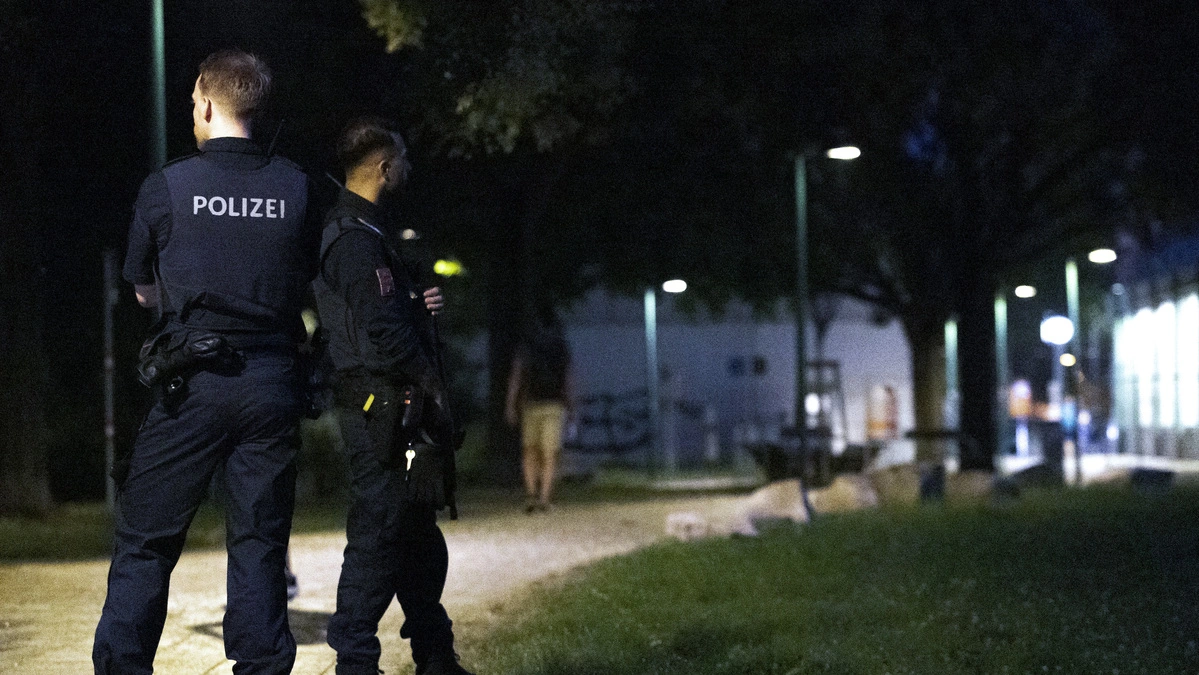
Vienna has become the centre of a growing debate over the treatment of “intensive offenders” under the age of 14 — children who repeatedly come to the attention of police for serious or violent offences.
Under Austrian law, children under 14 are not criminally responsible. This means they cannot be sentenced under the criminal justice system in the same way as older teenagers or adults.
However, authorities argue that simply releasing a child back into the same environment after repeated serious incidents may not always be enough.
Vienna's “Time-Out WG”
One proposed response is the “Auszeit-WG”, roughly translated as a time-out residential group. The concept provides a controlled residential environment for particularly difficult cases, while combining supervision with social and educational support.
According to Austria's Interior Ministry, the Vienna facility currently has one child staying there, with preparations underway for another admission.
The government has also called for similar facilities to be developed elsewhere in Austria.
Why has the issue become so prominent?
The Interior Ministry reports that the number of suspected offenders under 18 increased from 37,185 in 2021 to 49,067 in 2025. The increase has also drawn attention to the group aged between 10 and 14.
Interior Minister Gerhard Karner has argued that authorities need additional options for cases involving children who repeatedly commit serious offences.
One proposal involves bringing together police, youth welfare authorities, schools and other relevant organisations to assess particularly serious cases involving children aged 11 to 13.
A difficult question
The debate is not simply about whether children should be punished.
Because children under 14 are legally considered too young to be criminally responsible, the central question is how authorities can protect victims and the public while also protecting the rights and future of the child.
Supporters of stricter measures argue that repeated serious offending requires an effective intervention before a child reaches the age of criminal responsibility.
Critics, meanwhile, question how far the state should be allowed to restrict a child's freedom and stress the importance of education, family support, social work and rehabilitation.
The bigger question
Vienna's experiment could become an important test for Austria:
What should happen when a child is too young to go to prison, but their behaviour is considered too dangerous to simply ignore?
Sources & credits
- Boschner, Anna. “Kriminelle Kinder: ‘Ich mach so lange weiter, bis ich 14 bin.’” Salzburger Nachrichten, 20 Aug. 2026, www.sn.at/panorama/oesterreich/kriminelle-kinder-ich-mach-so-lange-weiter-bis-ich-14-bin-art-668584.
- Federal Ministry of the Interior. “Kriminalität und Jugend.” Bundesministerium für Inneres, 20 Aug. 2026, www.bmi.gv.at/newsbf97.html?id=796b79434644434b557a413d.
- “APAIMG_474782139.HR.jpg.” Die Presse, image, img.diepresse.com/public/incoming/ivl4cb-apaimg474782139hrjpg/alternates/WEBP_WIDE_1200/APAIMG_474782139.HR.jpg.