The Invisible Universe: Why Most of Reality Is Missing
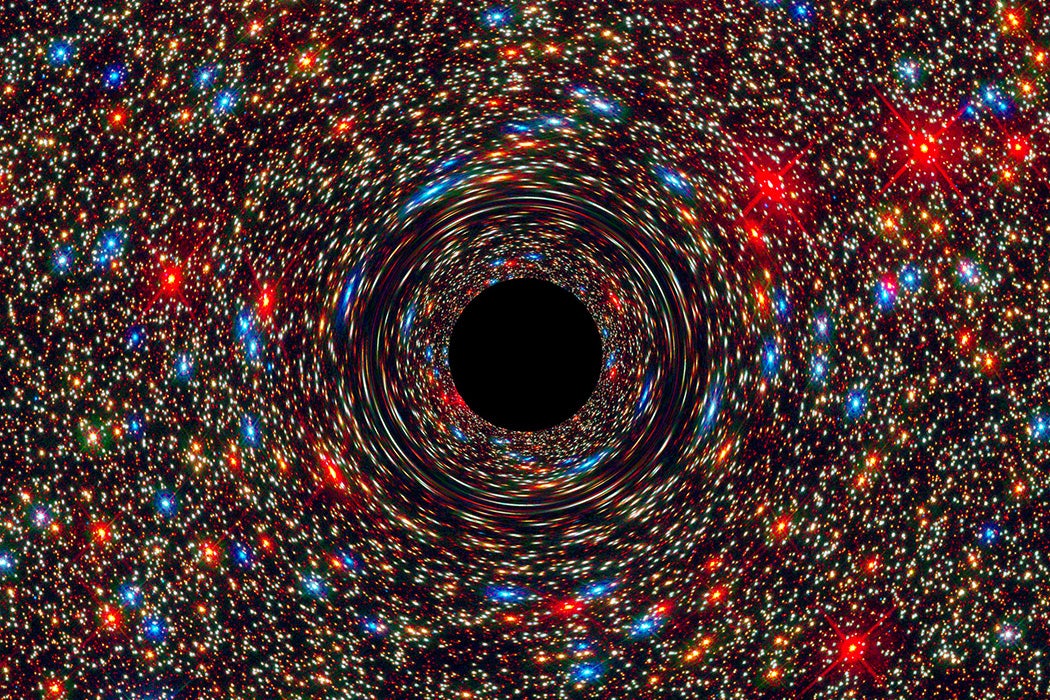
Look up at the night sky, and it feels complete. Stars, planets, maybe even a faint glimpse of the Milky Way stretching across the darkness, it gives the impression that we’re seeing everything there is to see. But that sense of completeness is an ilusion. In reality, almost everything in the universe is invisible.
This idea comes from one of the most fascinating mysteries in modern astronomy: dark matter.
Scientists first began to suspect something strange in the early 20th century, when they observed galaxies behaving in ways that didn’t make sense. According to the laws of physics, stars on the outer edges of galaxies should orbit more slowly than those near the center, where most of the visible mass is concentrated. But when astronomers actually measured these speeds, they found something unexpected. The outer stars were moving far too fast—as if something unseen was holding the galaxy together.
That “something” was named dark matter.
Dark matter doesn’t emit light, reflect light, or absorb light. It doesn’t interact with the electromagnetic forces that allow us to see and measure ordinary objects. Yet its gravitational pull is undeniable. Without it, galaxies would simply fly apart. In fact, scientists now believe that about 85% of all matter in the universe is dark matter. Everything we can see—stars, planets, gas, dust, even you—makes up only a tiny fraction of what actually exists.
So what is dark matter made of?
That’s where things get even more interesting. Despite decades of research, no one knows for sure. Some scientists think it could be made of entirely new types of particles that have never been detected before. Others suggest it might involve unknown properties of space itself. Massive underground detectors, particle accelerators, and even observations of distant galaxies are all part of the search to understand it.
And then there’s an even bigger mystery: dark energy.
If dark matter holds things together, dark energy does the opposite. It pushes the universe apart. In the late 1990s, astronomers discovered that the expansion of the universe is not slowing down, as expected, but accelerating. Something is driving galaxies away from each other faster and faster. That something was called dark energy, and it may make up about 70% of the entire universe.
Put it all together, and the conclusion is astonishing. The universe we experience directly—the one made of atoms and light—accounts for only about 5% of everything that exists. The rest is hidden in forms we can barely detect and do not yet understand.
This realization changes how we think about reality. It suggests that what we perceive is just a thin surface layer of a much deeper and more complex cosmos. It also raises profound questions. If most of the universe is invisible, what else might we be missing? Are there forces or structures we haven’t even imagined yet?
Science doesn’t have all the answers—but that’s exactly what makes this mystery so compelling. Every discovery brings us closer to understanding the unseen majority of the universe, while also revealing just how much there is left to explore.
In a way, dark matter and dark energy remind us of something simple but powerful: the universe is far stranger, and far larger, than it appears at first glance.

