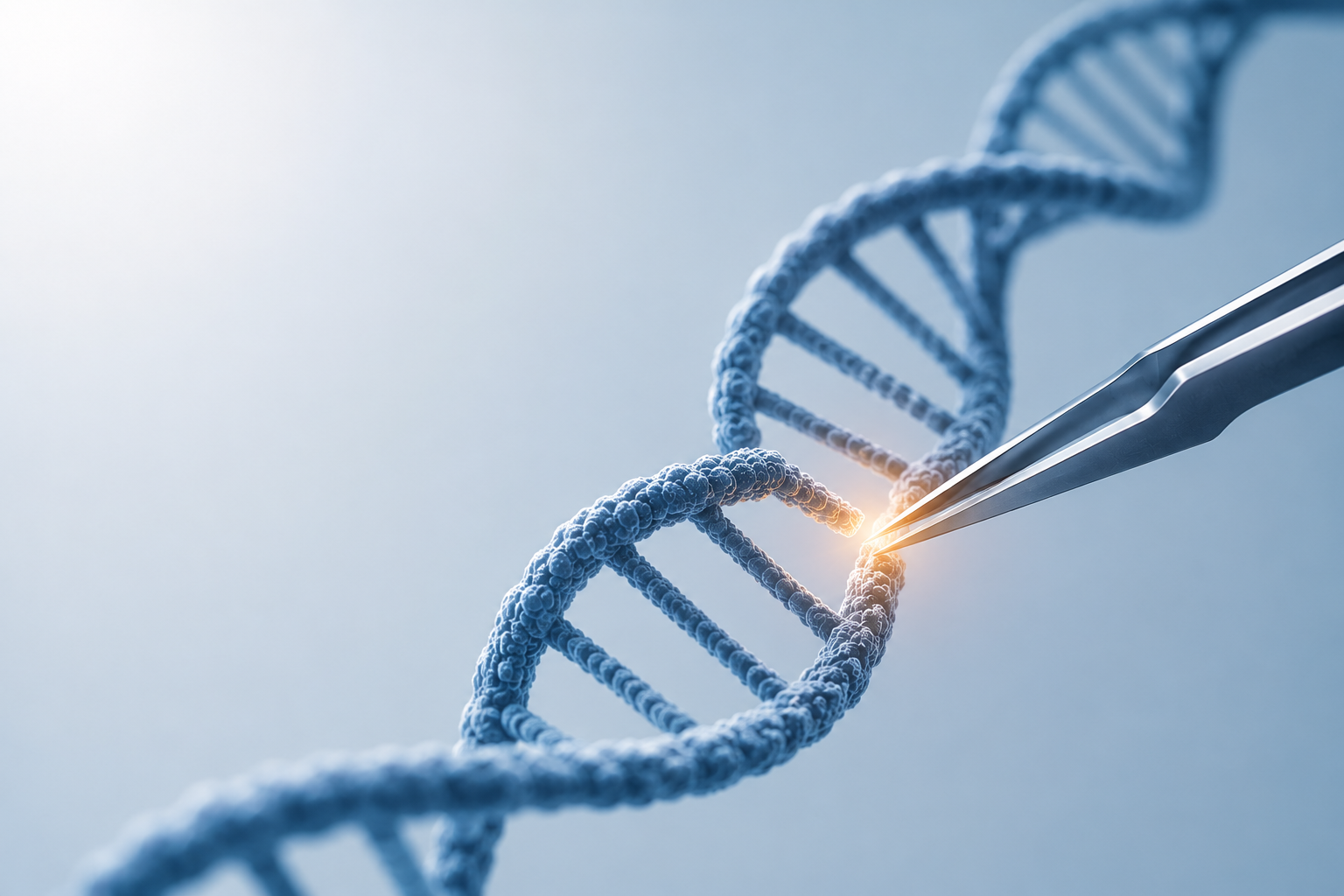
New "Extinction Drive" Technology Using CRISPR
New technology can potentially be used to eliminate harmful mosquitoes and other dangerous Insects via DNA modification

When you ask the question what is the deadliest animal in the world (other than humans), you will hardly expect the answer to simply be: mosquitoes. However this is true, and they can kill around 700,000 people a year! And it doesn't stop there. There are many deadly animals dangerous to not only humans but also livestock, such as sandflies and ticks, which kill many thousands every year.
The reason for this is not because of the bite, but the fact that they spread dangerous diseases, especially malaria.
Now imagine a world where mosquitoes and other harmful insects are simply a distant memory. People enjoy the summer without the constant irritation of mosquito bites, or the threat of contracting some pathogen or other. Where they have long since used CRISPR gene editing to eradicate dangerous insects although it may have some effects on the food web. This technology is now possible due to a new idea on spreading harmful genetic traits against the effects of natural selection.
The Main Concept
Originally, the best method we had was to make harmful insects infertile by using radiation before releasing them, as most female mosquitoes only mate once. This was not a very useful method as it was expensive, difficult, and very often not all were affected and then they repopulated.
The idea behind this new method is not to make them infertile, but to give them harmful genetic traits, allowing them to have children with these traits.
Though this does not work on its own, so it would have to change the inheritance ratios to go against natural selection, which is called a gene drive.
Against Natural Selection
Natural selection is when a species with worse genetic traits normally don't survive long enough to produce offspring, and those that do can make children that might not survive long themselves, and so on, while those with better genetic traits thrive and manage to pass on their genes, making more of those genes. (Note: This is an oversimplification and there are other factors, but to keep this short I won't go into detail about that). The issue with the gene drive method is that if you were to make the disease spreading insects more easy to die out, those without the altered genes would survive while the worse ones would die out of course.
This is where the new theory comes in. When animals mate, there is only a 50% chance that one of their offspring inherits a specific gene, so normally those without the altered genes would likely survive and the others die out. So to go against natural selection, we must try to make sure more of them receive the altered genes, so that enough survive to allow the survival of those carrying the gene, meaning those too can mate and continue to pass on the genes, allowing it to spread through the population!
Isn't This Harmful to The Food Chain?
Although it may seem so at first, the truth is that while mosquitoes and some dangerous insects don't play very important roles in the ecosystem, and it may not be our place to decide what stays and what goes in such complex ecosystems, the idea of saving many human lives is very attractive, and although things may get a bit worse at first, the animals could recover and adapt their diets, and other insect species might expand in their place, since some mosquito species are more human-adapted, although there may be some repercussions that we haven't thought about, leaving it up for debate.
A possible solution for this is that we could store the eggs of some species of harmful insects by freezing them to reintroduce them if there happen to be large persistent effects on the ecosystem, however this strategy may not work if the hungry animals eat them too quickly for the population to grow to a stable number, which leaves space for controversy.
So all in all, the main reason why we have not started using this tool is because of the controversy and the risks to an already changing environment. But if we can determine that it has only mild effects, if we can get past the controversies and the threats and remain with a worthwhile method, then millions of lives would be saved, and while now it seems unlikely, perhaps one day people will look back on us today and wonder what took us so long to introduce gene drives.
One sometimes finds what one is not looking for. - Alexander Fleming
Fully produced by me, AI only used for research.