Michio Kaku: A Life at the Frontier of Physics
Series: Biographies
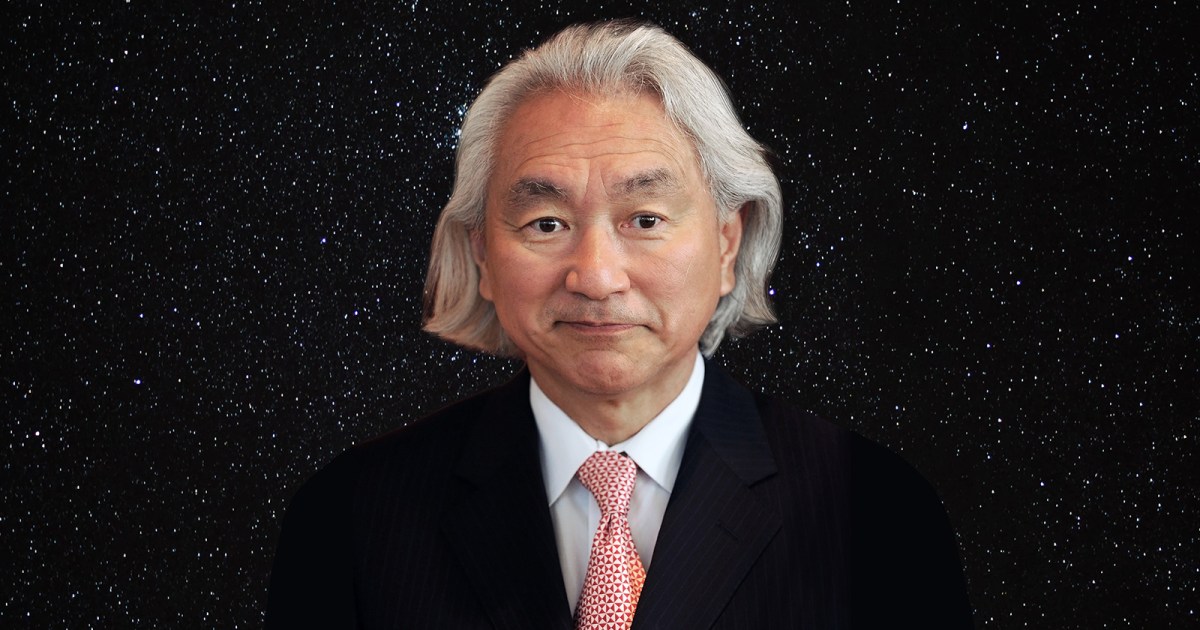
Few modern scientists have done as much to bridge the gap between advanced theoretical physics and the public imagination as Michio Kaku. A theoretical physicist, futurist, and prolific author, Kaku has spent decades exploring the deepest questions about the universe while making those ideas accessible to millions.
Early Life and Education
Michio Kaku was born on January 24, 1947, in San Jose, to Japanese-American parents. His father, who had experienced internment during World War II, encouraged discipline and education—values that would shape Kaku’s path.
From an early age, Kaku showed an unusual fascination with physics. As a teenager, he famously built a particle accelerator in his parents’ garage using scavenged parts, an early sign of both his ambition and creativity.
He later attended Harvard University, where he studied physics, before completing his PhD at University of California, Berkeley. His doctoral work focused on theoretical physics, placing him at the cutting edge of research into the fundamental laws of nature.
Scientific Contributions
Kaku is best known for his work in String Theory, one of the most ambitious attempts to unify all forces of nature into a single framework.
He co-founded a branch of string theory known as string field theory, which attempts to describe the behavior of strings—the hypothetical one-dimensional objects that may underlie all particles—in a mathematically consistent way.
At its core, this work seeks to unify:
- Gravity (described by General Relativity)
- Quantum mechanics (the physics of the very small)
This “theory of everything” remains one of the greatest unsolved challenges in physics.
[Kaku the Science Communicator]
While many theoretical physicists remain within academia, Kaku became widely known for his ability to explain complex ideas clearly and engagingly.
Through books such as Physics of the Impossible and The Future of Humanity, he explores topics ranging from:
- Time travel
- Parallel universes
- Artificial intelligence
- Space colonization
He has also appeared frequently on television and radio, becoming one of the most recognizable voices in popular science.
Kaku’s Vision of the Future
Beyond pure physics, Kaku is known for his forward-looking predictions about technology and society. He often discusses how advances in science may shape the coming decades, including:
- Brain–computer interfaces
- Quantum computing
- Interstellar travel
- The long-term survival of humanity beyond Earth
He argues that humanity is entering a transition toward what he calls a “Type I civilization,” a concept based on the Kardashev scale, which measures a civilization’s energy usage.
Criticism and Debate
Kaku’s work has not been without criticism. Some physicists argue that string theory, while mathematically elegant, lacks experimental evidence. Others view his futurist predictions as overly optimistic or speculative.
Nevertheless, even critics acknowledge his role in bringing advanced physics into public discourse.
Legacy and Impact
What distinguishes Michio Kaku is not only his scientific work but his influence on how science is communicated. He has helped transform abstract, highly technical ideas into narratives that inspire curiosity and exploration.
In an era where science increasingly shapes global challenges—from energy to space exploration—figures like Kaku play a crucial role in connecting research with society.
Conclusion
Michio Kaku stands at a unique intersection of science, imagination, and communication. Whether through his contributions to theoretical physics or his efforts to popularize complex ideas, he has helped redefine what it means to be a modern scientist.
His work invites a broader audience to engage with some of the deepest questions ever asked: What is the universe made of? Where is humanity headed? And what lies beyond the limits of our current understanding?
