The Hidden Intelligence of Cells: Rethinking Biology in the 21st Century
This is an automatic translation. Read the original

For much of modern science, cells were viewed as simple building blocks—microscopic machines carrying out instructions encoded in DNA. Today, that view is rapidly changing. New discoveries suggest that cells are far more dynamic, responsive, and even “intelligent” than previously thought, reshaping our understanding of life itself.
The Cell as a Dynamic System
At the center of modern biology lies the concept that a cell is not just a passive unit, but an active system constantly sensing and responding to its environment. Through complex networks of proteins and signaling pathways, cells can:
- Communicate with neighboring cells
- Adapt to stress and damage
- Make decisions about growth, division, or death
This behavior is governed by intricate biochemical processes such as Signal Transduction, where external signals are converted into internal actions.
Rather than acting like simple machines, cells behave more like self-regulating systems.
Gene Editing and the Control of Life
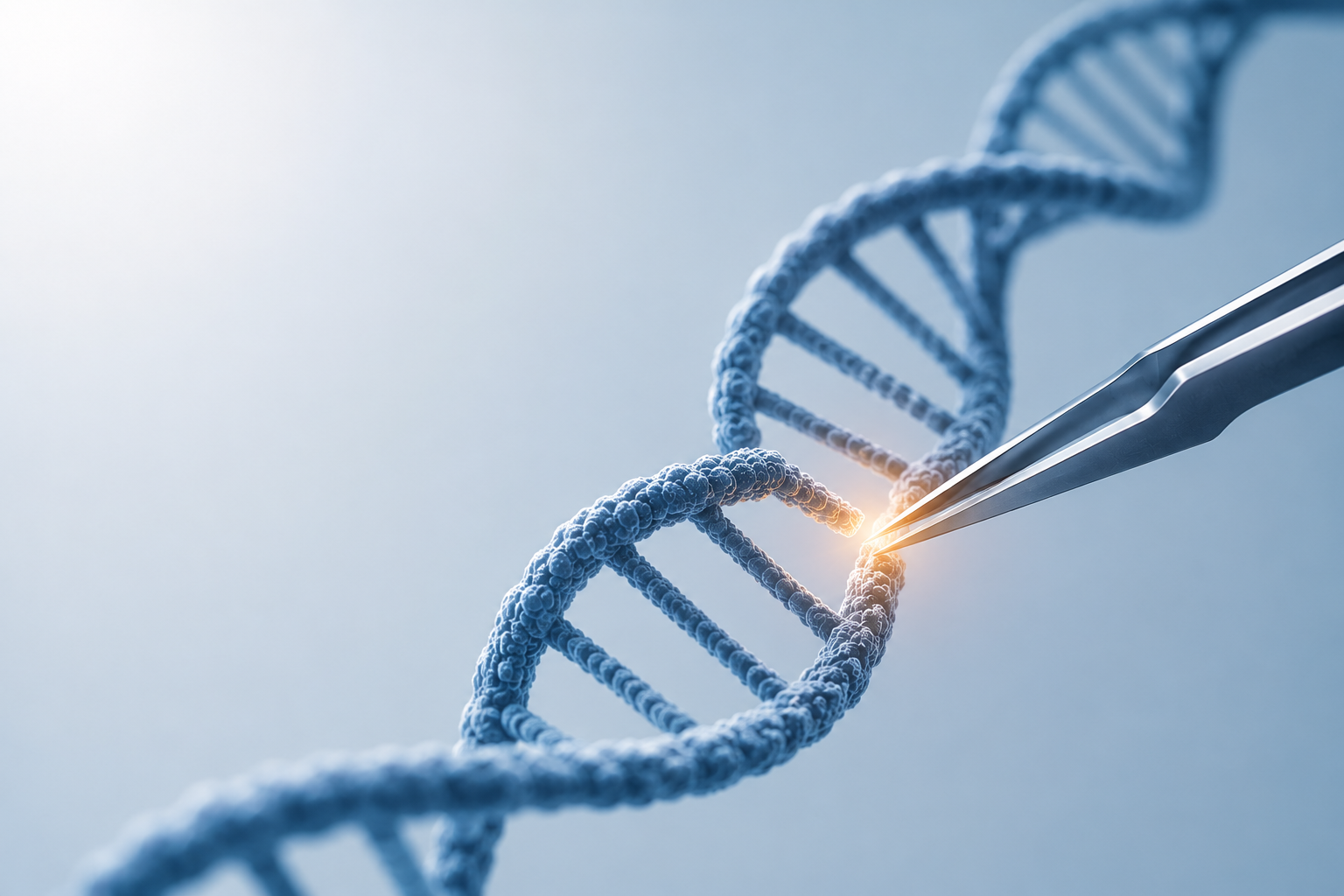
One of the most transformative tools in biology is CRISPR, which allows scientists to precisely modify DNA.
Recent advances have gone beyond basic editing:
- Base editing can change a single DNA letter without cutting the strand}
- Prime editing acts like a “search-and-replace” function for genes}
These developments are already leading to experimental treatments for genetic diseases such as Sickle Cell Disease.
The ability to rewrite genetic code raises profound questions about the future of medicine—and the limits of human intervention in evolution.
Microbiomes: The Invisible Ecosystem
Another major shift in biology is the recognition that humans are not isolated organisms. Instead, we exist as ecosystems, hosting trillions of microorganisms collectively known as the Microbiome.
These microbes:
- Aid digestion
- Influence the immune system
- May even affect mood and behavior
Research suggests that disruptions in the microbiome are linked to conditions ranging from obesity to neurological disorders, opening new pathways for treatment.
Synthetic Biology and Artificial Life
Scientists are now moving beyond studying life to engineering it. In the field of Synthetic Biology, researchers design organisms with new functions.
Examples include:
- Bacteria that produce biofuels
- Cells engineered to target and destroy cancer
- Artificial genetic circuits that behave like biological computers
This field blurs the line between biology and technology, raising the possibility of programmable living systems.
The Brain and Biological Intelligence
Biology is also redefining intelligence itself. Research into the brain shows that cognition emerges from networks of neurons, but similar principles may apply at smaller scales.
Even single cells can:
- Process information
- Store “memory” of past conditions
- Adjust future responses accordingly
This suggests that intelligence is not confined to brains but may be a fundamental property of living systems.
The Future of Biology
The convergence of genetics, computation, and engineering is transforming biology into one of the most rapidly advancing sciences. Key directions include:
- Personalized medicine based on genetic profiles
- Lab-grown organs for transplantation
- Biological solutions to climate challenges
As these fields develop, biology is shifting from a descriptive science to a predictive and design-driven discipline.
Conclusion
Modern biology is revealing that life is not merely a collection of chemical reactions, but a complex, adaptive system capable of behavior that approaches decision-making. From gene editing to synthetic organisms, the boundaries of what is possible are expanding rapidly.
In this emerging view, life is no longer something we simply observe. It is something we are beginning to understand, manipulate, and ultimately, design.